

Windmill is an open-source developer platform to quickly build production-grade multi-steps automations and internal apps from minimal Python and Typescript scripts.



Join the beta (personal workspaces are free forever): https://app.windmill.dev
Documentation: https://docs.windmill.dev
Discord: https://discord.gg/V7PM2YHsPB
You can show your support for the project by starring this repo.
Windmill
Disclaimer: Windmill is in BETA. It is secure to run in production but the API might change, especially concerning flows.

Windmill is fully open-sourced:
community/,python-client/anddeno-client/are Apache 2.0- backend, frontend and everything else under AGPLv3.
What is the general idea behind Windmill
-
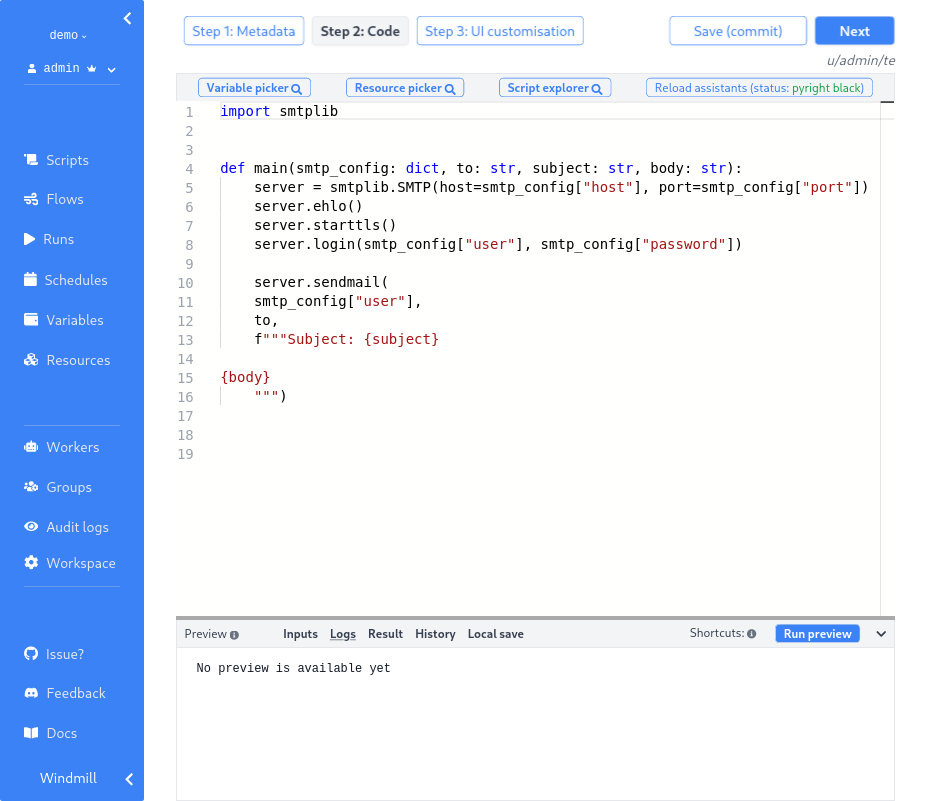
Define a minimal and generic script in Python or Typescript that solve a specific task. Here sending an email with SMTP. The code can be defined in the provided Web IDE or synchronized with your own github repo:
-
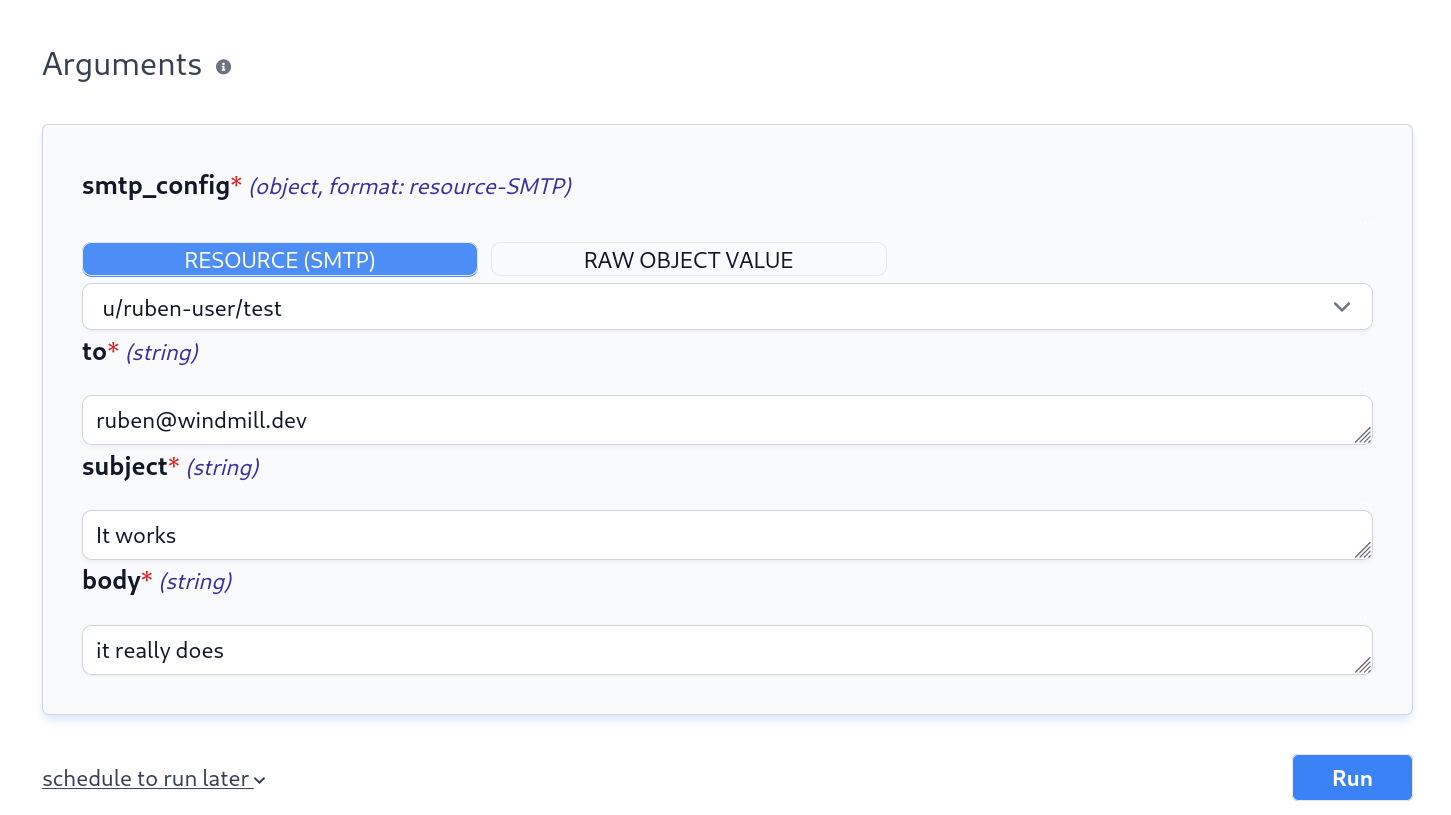
Your scripts parameters are automatically parsed and generate a frontend. You can narrow down the types during task definition to specify regex for string, an enum or a specific format for objects. Each script correspond to an app by itself:
-
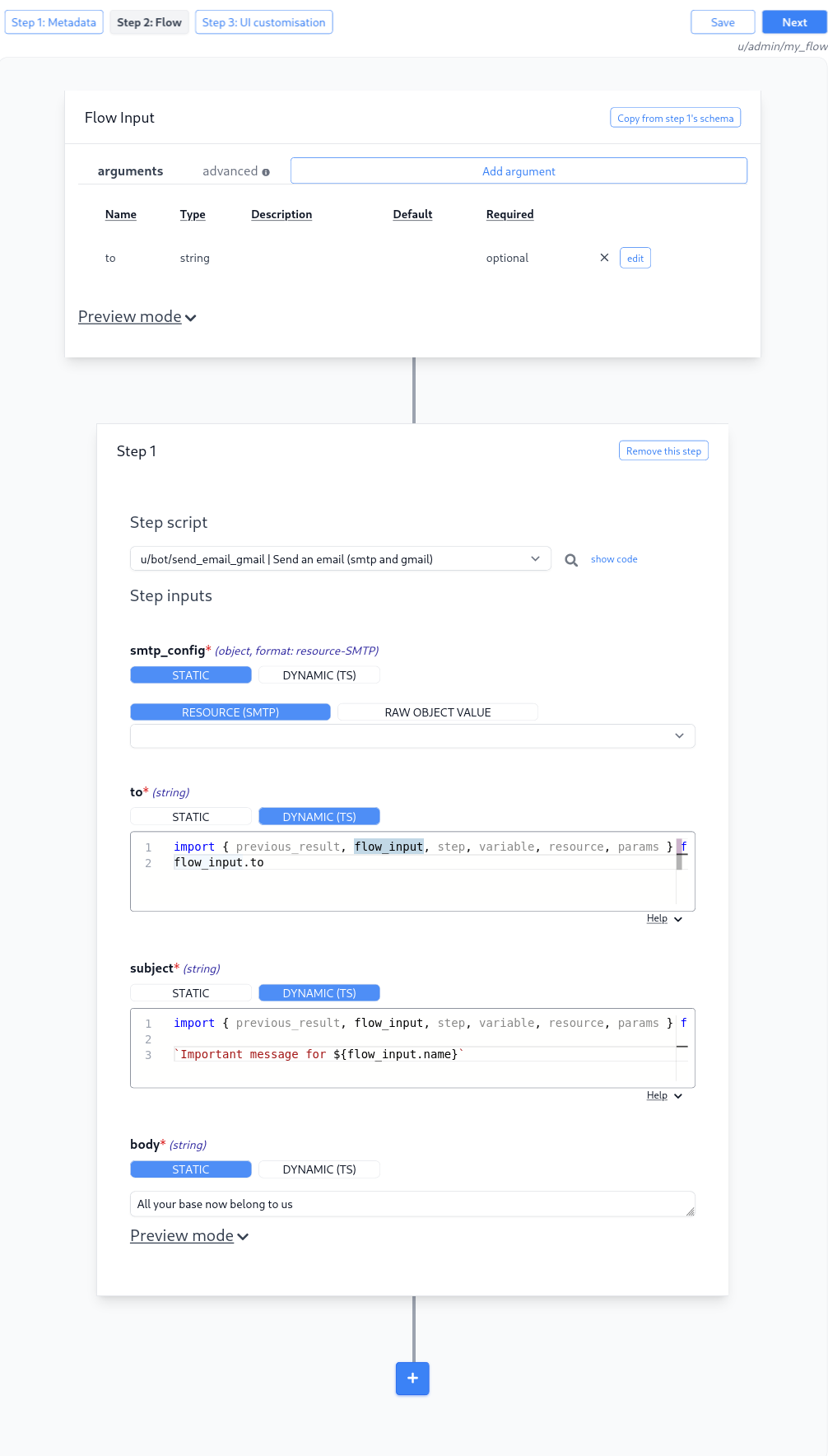
Make it flow! You can chain your scripts or scripts made by the community inside flow by piping output to input using "Dynamic" fields that are just plain Javascript. You can also refer to external variables, output from any steps or inputs of the flow itself. The flow parameters then generate automatically an intuitive forms that can be triggered by anyone, like for scripts.


Layout
backend/: The whole Rust backendfrontend: The whole Svelte frontendcommunity/: Scripts and resource types created and curated by the community, included in every workspacelsp/: The lsp asssistant for the monaco editornsjail/: The nsjail configuration files for sandboxing of the scripts' executionpython-client/: The wmill python client used within scripts to interact with the windmill platformdeno-client/: The wmill deno client used within scripts to interact with the windmill platform
Stack
- postgres as the database
- backend in Rust with the following highly-available and horizontally scalable
architecture:
- stateless API backend
- workers that pull jobs from a queue
- frontend in Svelte
- scripts executions are sandboxed using google's nsjail
- javascript runtime is deno_core rust library (which itself uses the rusty_v8 and hence V8 underneath)
- typescript runtime is deno
- python runtime is python3
Development stack
- caddy is the reverse proxy used for local development, see frontend's Caddyfile and CaddyfileRemote
Architecture

How to self-host
docker compose up with the following docker-compose is sufficient:
https://github.com/windmill-labs/windmill/blob/main/docker-compose.yml
For older kernels < 4.18, set DISABLE_NUSER=true as env variable, otherwise
nsjail will not be able to launch the isolated scripts.
To disable nsjail altogether, set DISABLE_NSJAIL=true.
The default super-admin user is: admin@windmill.dev / changeme
From there, you can create other users (do not forget to change the password!)
Detailed instructions for more complex deployments will come soon. For simpler docker based ones, the docker-compose.yml file contains all the necessary informations.
OAuth for self-hosting
To get the same oauth integrations as Windmill Cloud, mount oauth.json with
the following format:
{
  "<client>":
    "id": "<CLIENT_ID>",
    "secret": "<CLIENT_SECRET>"
}
and mount it at /src/usr/app/oauth.json.
You will also want to import all the approved resource types from WindmillHub.
Contributors
Copyright
Windmill Labs, Inc 2022